
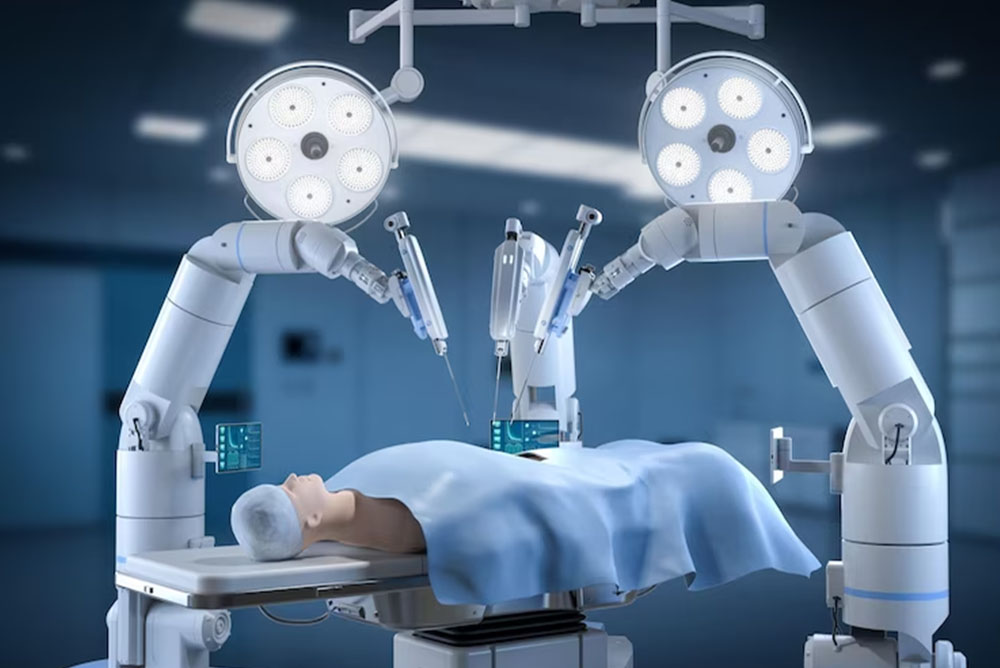
The phrase "robotic surgery" can sometimes sound like a scene from a science fiction movie. It's easy to imagine a fully automated machine standing over an operating table, making its own decisions.
The reality is much more grounded — and much more reassuring. The robot doesn't think, choose, or act independently. Instead, it is an incredibly advanced tool completely controlled by a highly trained human surgeon.
How the Technology Works in the Operating Room
During a robotic-assisted procedure, the surgical team positions a multi-armed cart next to the patient. These mechanical arms hold specialized, miniature instruments and a high-definition, 3D camera.
The primary surgeon sits a few feet away at an ergonomic console. Look closely at how the technology translates human movement:
- The View: The surgeon looks through a specialized viewfinder that provides a magnified, high-definition 3D image of the surgical field. This offers vastly superior depth perception compared to standard flat-screen laparoscopy.
- The Controls: The surgeon handles master controllers—essentially highly sensitive joysticks—and foot pedals.
- The Movement: When the surgeon moves their hands, the robotic arms mimic those motions in real time inside the patient's body. The system even filters out natural human hand tremors, enabling a level of structural stability that isn't physically possible otherwise.
The Clear Advantages for Patients
Because the robot allows for such high precision in incredibly tight spaces, surgeons can perform complex operations through tiny, keyhole incisions rather than massive open wounds. For patients, this offers several distinct benefits:
- Significantly less postoperative pain due to minimal tissue disruption.
- Reduced blood loss and lower transfusion rates.
- Shorter hospital stays, often allowing patients to go home the same or next day.
- Faster return to daily life and normal physical activities.
Ultimately, robotic surgery isn't about replacing human touch; it's about giving a skilled surgeon the best possible tools to ensure a safer, more precise, and more comfortable recovery for you.
Dr. Rakesh Kumar is a highly experienced robotic surgeon with over 24 years of experience and 15,000+ successful surgeries. He is the AIIMS Trained | Director & Head – General, GI, Minimal Access, Bariatric & Robotic Surgery at Fortis Hospital, Manesar.